


1)Automatic Gate Barriers: The Future of Smart Vehicle Access Control
2)What Is an Automatic Gate Barrier and Vehicle Gate
3)How Does an Automatic Gate Barrier Work
4)Benefits of Automatic Gate Barriers and Vehicle Gates
6)Installation and Implementation
7)Common Problems and Solutions
Imagine driving into your facility and watching the gate lift automatically — no waiting, no manual effort, no security guard needed to open it. That’s the convenience and intelligence of an automatic gate barrier and vehicle gate system.
For Facility Managers, Security Heads, and Business Owners, modern gate automation isn’t just about convenience — it’s about operational efficiency, safety, and the future of smart access control.
This article explains how these systems work, why they matter, and how they can redefine the way your facility manages vehicle movement.
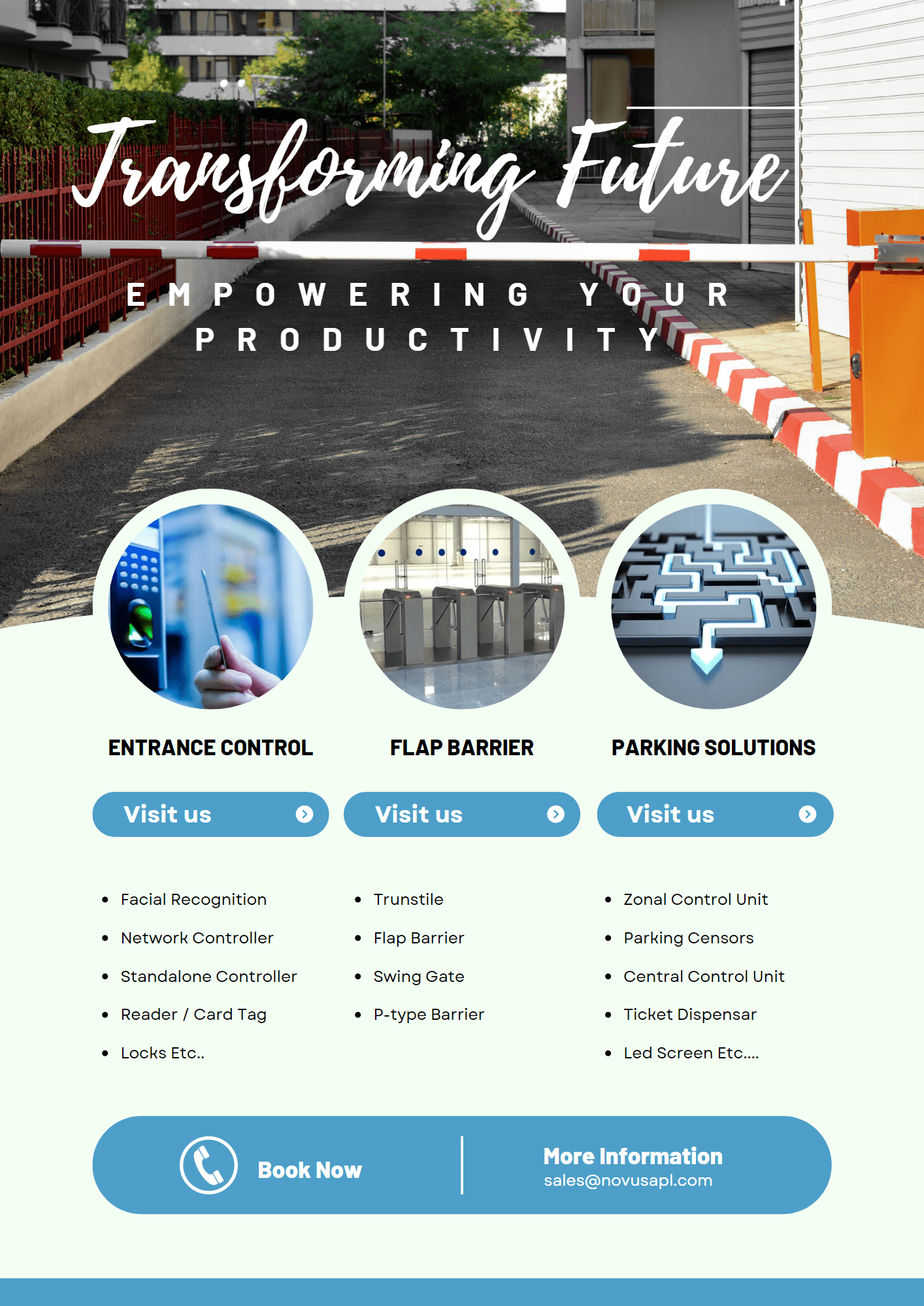
A boom barrier is an electromechanical or hydraulic gate arm that automatically controls vehicle accesAn automatic gate barrier is a motorized arm or gate system that opens or closes automatically when triggered — typically used in parking lots, business complexes, gated communities, or industrial areas. A vehicle gate, on the other hand, is a broader term. It includes swing gates, sliding gates, or cantilever gates integrated with automation for seamless vehicle entry and exit. These systems combine mechanical and electronic components to ensure fast, secure, and efficient vehicle movement without the need for manual operation.
Automatic gate barriers and vehicle gates integrate several mechanical and electronic parts to control access precisely.
Key Components
When an authorized vehicle approaches, sensors or tags communicate with the control system. The gate opens, the vehicle passes, and the gate closes automatically — all within seconds.
Automatic gate barriers limit unauthorized access, log every entry and exit, and can integrate with CCTV or number plate recognition systems for maximum monitoring.
Authorized vehicles can enter without manual assistance or delays, saving significant time in high-traffic environments.
Automatic barriers improve efficiency by reducing wait times by up to 24% compared to manual gates, especially in commercial or residential parking areas.
Automation reduces dependency on human guards, minimizes error, and enhances reliability.
Installing an automated gate adds aesthetic appeal and technological value to both residential and commercial properties.
Modern systems include safety sensors that prevent the gate from closing on vehicles or pedestrians.
Though installation costs are higher initially, automation leads to significant savings in manpower, reduced risk, and fewer operational interruptions.
Automated gates project professionalism, streamline employee access, and secure restricted zones
Factories and logistics hubs use automatic barriers to manage delivery trucks, visitor vehicles, and employee entry points efficiently.
Homeowners and property managers enjoy enhanced privacy, convenience, and better visitor control.
These facilities benefit from contactless, fast, and secure vehicle management systems.
Automatic barriers manage high traffic volumes, ensuring efficient operation and minimal human involvement.
Evaluate gate type, entrance size, vehicle volume, power availability, and access control needs before installation
Choose between barrier arms, swing gates, or sliding gates depending on the site’s space and functional requirements.
Install the gate motor, mount sensors, connect control systems, and integrate access control.
Ensure smooth performance and train personnel to manage operations and troubleshoot minor issues.
Schedule routine inspections, lubricate moving parts, and test power backups to ensure reliability.
| Common Issue | Recommended Solution |
|---|---|
| Power failure | Install a battery backup or solar power source |
| Sensor malfunction | Clean and recalibrate sensors regularly |
| Slow gate response | Inspect motor speed and electrical connections |
| Mechanical jamming | Lubricate tracks and hinges routinely |
| Access control failure | Update or reprogram control software |
Preventive maintenance ensures smooth operation and avoids costly repairs.
Most facilities recover their investment within 2–3 years through operational efficiency, improved safety, and reduced manpower costs.
Artificial intelligence will soon make gate systems smarter, automatically identifying vehicles through number plate recognition and database matching.
Internet-enabled gates allow remote monitoring, control, and data tracking for traffic analytics and predictive maintenance.
Solar-powered gates are becoming popular for sustainability and lower operating costs.
Mobile apps and biometric verification systems enhance user convenience and hygiene by eliminating physical keys and remotes.
Sensors and AI-based analytics will identify faults before breakdowns occur, minimizing downtime.
Automatic gate barriers and vehicle gates represent the future of smart security and efficient access control. They combine advanced technology, safety features, and reliability to simplify facility management while ensuring peace of mind. Whether it’s for a corporate park, residential community, or industrial complex, these systems deliver lasting value through enhanced security and convenience. If you’re planning to modernize your access control infrastructure, this is the perfect time to invest.
Learn more about the evolution of automatic barriers on Wikipedia.
Completion timeline typically ranges from 1–5 days depending on system complexity.
It restricts unauthorized access, logs every entry and exit, and integrates with surveillance systems for complete monitoring.
Yes. Most modern systems include battery backups or solar options to remain functional during outages.
Typically 10 to 15 years, depending on build quality and maintenance.
Installation usually takes 2 to 4 days, depending on site conditions and system type.
Basic upkeep includes cleaning, lubrication, and annual professional servicing.
Yes, through smartphones, remotes, RFID cards, or integrated building management systems.
Yes. Scalable models are available for smaller sites and limited budgets.
Yes, provided they include safety sensors, infrared detectors, and obstacle protection features.
Yes. Integration with existing security infrastructure is standard for most systems.
Integration with AI, IoT, and renewable energy is shaping the next generation of intelligent, self-learning access control systems.
Ready to secure your premises with smarter automation? Contact Novus Automation Pvt. Ltd. today to explore advanced automatic gate barrier and vehicle gate solutions tailored to your facility’s needs.
Phone: +91-72900-44421
Email: sales@novusapl.com
Accelerate Your Business with Novus Automation
Become a Partner