

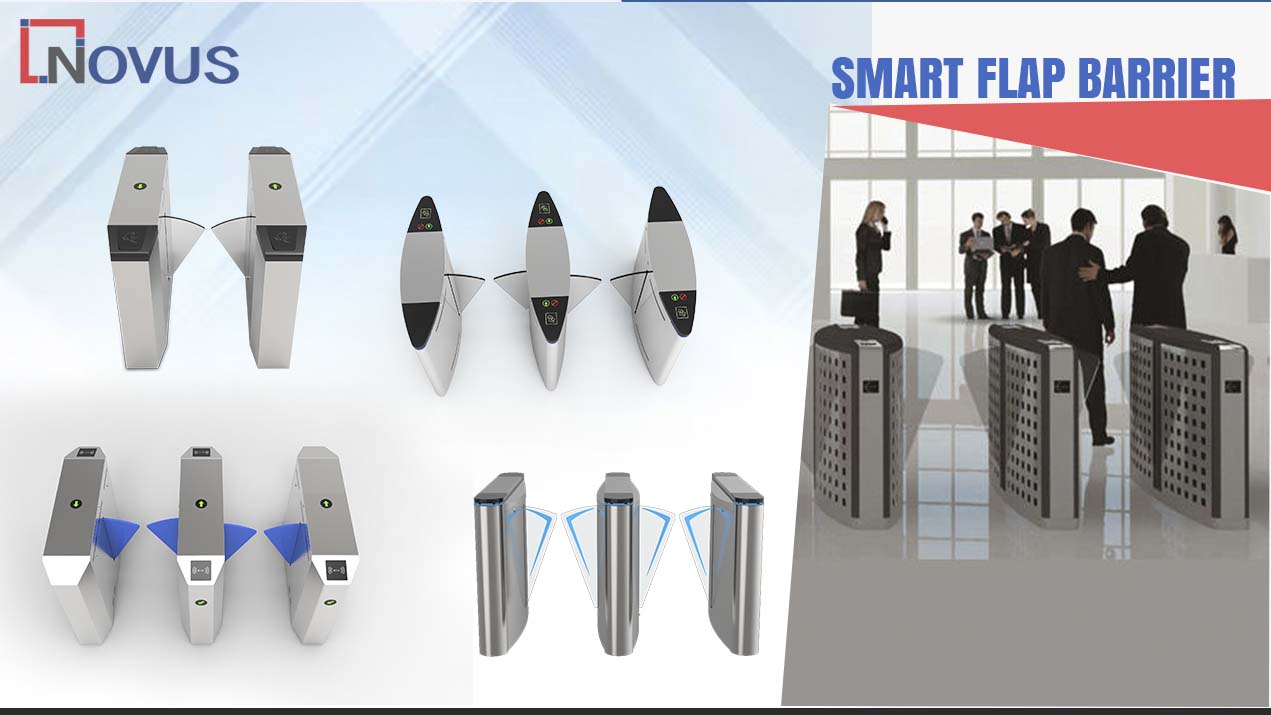
1) Revolutionizing Security and Crowd Management through Flap Barrier
2) Advantages of Flap Barriers
In a world where technology continually evolves, ensuring safety and security is of utmost importance. Among the innovative devices contributing to this cause, flap barriers have emerged as an advanced solution for crowd control and access management. These access gates not only effectively manage the flow of people but also enhance security measures in various environments.
Flap barriers find extensive application in diverse environments, making them a versatile choice for security-conscious companies and business facilities. From corporate parks and government office buildings to airports, museums, and shopping complexes, flap barriers offer a reliable means of access control. Their adaptability is underscored by their effectiveness in places with high foot fall, ensuring seamless entry and exit.
Similar to boom barriers, flap barriers come in various types, each tailored to specific security needs. High-speed flap barrier systems, flap barriers turnstile, remote-controlled flap barriers, biometric flap barriers, and card-accessed barriers are among the options available. This diversity allows businesses and organizations to choose the most suitable variant based on their unique requirements.
As the crowd influx surges unexpectedly, the role of technology in access management becomes indispensable. With technological revolution, artificial intelligence, and biometric systems, flap barriers are becoming even more robust in preventing unauthorized access.
Flap barriers represent a paradigm shift in security and crowd management. Their ability to seamlessly integrate with advanced technologies, coupled with diverse applications, makes them crucial in our rapidly evolving world. As technology continues to advance, these barriers will play an increasingly important role in safeguarding high-end buildings and ensuring security and convenience.
A flap barrier is a pedestrian access control gate featuring retractable or swinging flaps that block passage until a valid credential (such as a card, biometric or QR code) is presented. It allows one-person-at-a-time passage, prevents tailgating and is widely used in entries with high foot traffic.
Flap barriers are designed to automate pedestrian access control and prevent unauthorized entry while maintaining smooth and secure crowd movement.
They are widely installed in airports, railway and metro stations, commercial offices, gyms, stadiums, malls and other high-footfall locations.
High-speed flap barriers, fully automatic versions, biometric flap barriers, and card/QR-enabled systems are among the most common variations.
Flap barriers regulate entries by authenticating one person at a time, preventing tailgating and managing queues efficiently.
Sensors detect authorized movement, obstructions or tailgating attempts, triggering security actions such as alarms or auto-closings.
Yes. They can integrate with RFID, biometric, face recognition, QR codes and other intelligent access systems for centralized monitoring.
They typically open within 0.3 to 1 second, enabling quick entry and preventing crowd delays during peak times.
Yes. They are often installed alongside wider swing gates or accessible lanes to support wheelchair users and those with mobility requirements.
They are typically built with stainless steel cabinets and durable acrylic or polycarbonate flaps for long-lasting performance in high-traffic settings.
In emergencies like fire alarms or power failures, flaps automatically retract or remain open to allow safe evacuation.
Yes. Automated entry reduces the need for full-time gate personnel, streamlines access monitoring and enhances overall security efficiency.
Pedestrian traffic levels, building layout, required access methods, safety and compliance requirements, and system compatibility must all be reviewed before selection and installation.

Accelerate Your Business with Novus Automation
Become a Partner